
STOCKSCH 165 – Intro to Sustainable Agriculture and Food Systems
3 credits
How to Enroll
Instructor – Dr. Jennifer (Jen) Santry
Contact – jenevesantry@gmail.com
Cell: 970-389-8128 (available by text or by appointment)
Course Description – This course explores the principles of sustainable agriculture for animal, crop, and garden production. We will study the ethical, practical and scientific aspects of agricultural sustainability including economic, social and environmental impacts of food and farming. We will use system thinking tools to compare industrial and ecological agriculture, and ultimately each student will develop a plan for a sustainable farming system based on personal and learned philosophies and forms.
In this comprehensive introduction to sustainable agriculture, we will explore fundamental production practices that will equip students with the knowledge and tools to turn their dreams of owning a farm, homestead, or garden into reality. Additionally, for those already engaged in agricultural pursuits, this course offers insights to enhance sustainability, efficiency, and profitability. Participants will gain a solid understanding of sustainable principles and learn to seamlessly apply them to the practical aspects of market gardens, food forests, livestock management, and farm finances.

Instructor Bio:: Halito. Han mitakuyepi. I am a citizen of Choctaw Nation of Oklahoma and I am Sicangu Lakota, Mdewakanton Dakota, and Yankton Dakota. I have a doctorate in Educational Sustainability, MA in Nonprofit Management, and BS in Zoology. Through Lakota stories and relationships with food, I am collaborating with my community to address the need for cultural preservation and land-based knowledge in sustainable agriculture education. I am based out of Santa Fe, New Mexico, and have extensive experience working with Pacific Northwest and Southwest Tribes in climate change planning, ancestral food revitalization, and counter-storytelling (interpreting and narrating our own stories as Indigenous people). I have been teaching in higher education for 12 years. I teach STOCKSCH 354 Nonprofit Management for Community Food and Farming Programs during Winter term and STOCKSCH 290 Native Food Systems in the Spring. I also teach Indigenous Planning and Native Food Systems in Montana
State University’s Native American Studies Graduate program. In addition to teaching, I am the Associate Director of Tribal Community Schoolyards at the Trust for Public land where I collaborate with Tribal communities to transform underutilized school grounds into vibrant, culturally relevant outdoor learning spaces for Native youth to have hands-on
opportunities for learning with the land.
Student Learning Objectives –
Our goal by the end of this course is for students to:
- Define terminology and concepts related to sustainable farming practices.
- Describe the ecological, economical, and social implications of agricultural practices.
- Identify theories and forms of sustainable agriculture.
- Articulate principles and strategies of sustainable agriculture.
- Utilize a systems approach to analyze agriculture in your own backyard and/or community.
- Apply best practices for basic soil, crop, watershed, & livestock management.
- Identify resources for solving problems facing farmers, ranchers, gardeners, and consumers in order to reduce waste and energy consumption in agriculture.
- Describe strategies to increase profit and efficiency for sustainable producers.
- Design productive and ecologically sound land use plans.
- Expand consumer awareness and support of ethical alternatives.
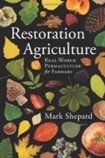
Course Book – Restoration Agriculture: Real-World Permaculture for Farmers by Mark Shepard – ISBN 978-1601730350. Additionally, there will be various assigned readings posted to Blackboard for each weekly module.
Academic Honesty: Students are expected to read and abide by guidelines for academic honesty detailed in the Undergraduate Rights and Responsibilities http://www.umass.edu/dean students/rights/. “No form of cheating, plagiarism, fabrication, or facilitating of dishonesty will be condoned in the University community.” Academic dishonesty will result in an automatic 0% on that assignment or test. Students will also be expected to read and to act in accordance with the ANA Code of Ethics outlined in the required texts and SON Student Handbook.
Accommodation Policy Statement: The University of Massachusetts Amherst is committed to providing an equal educational opportunity for all students. If you have a documented physical, psychological, or learning disability on file with Disability Services (DS), Learning Disabilities Support Services (LDSS), or Psychological Disabilities Services (PDS), you may be eligible for reasonable academic accommodations to help you succeed in this course. If you have a documented disability that requires an accommodation, please notify me within the first two weeks of the semester so that we may make appropriate arrangements.
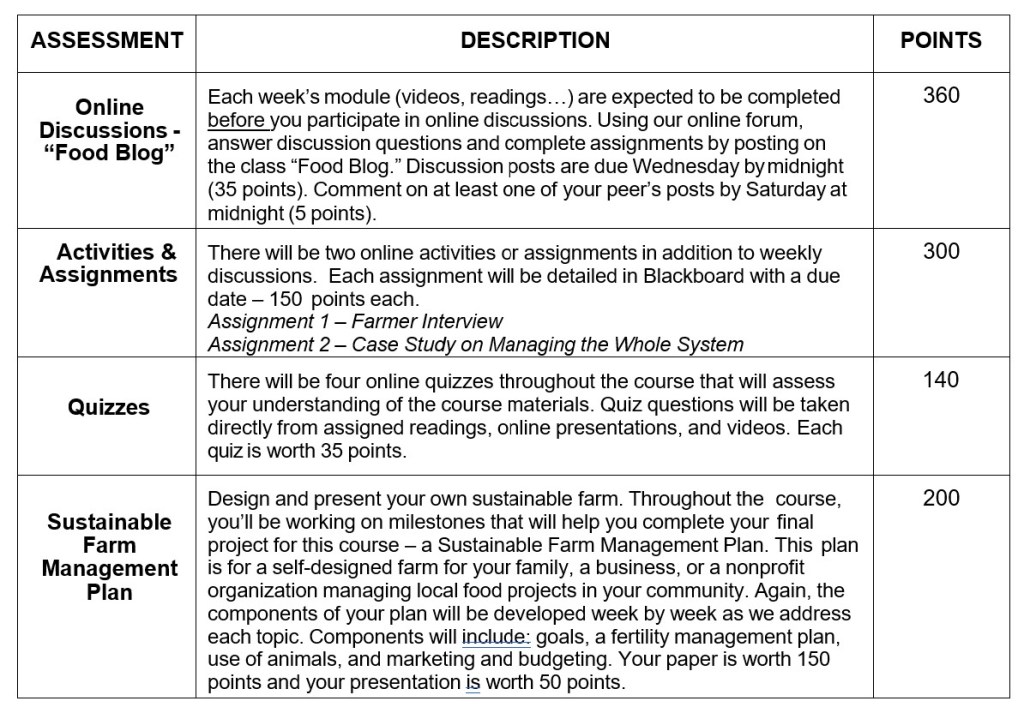
Grades will be assessed as follows:
9 Online Discussions (“Food Blog”) 360 points
2 Online Assignments 300 points
4 Quizzes 140 points
Final Project 200 points
TOTAL POINTS 1,000 points
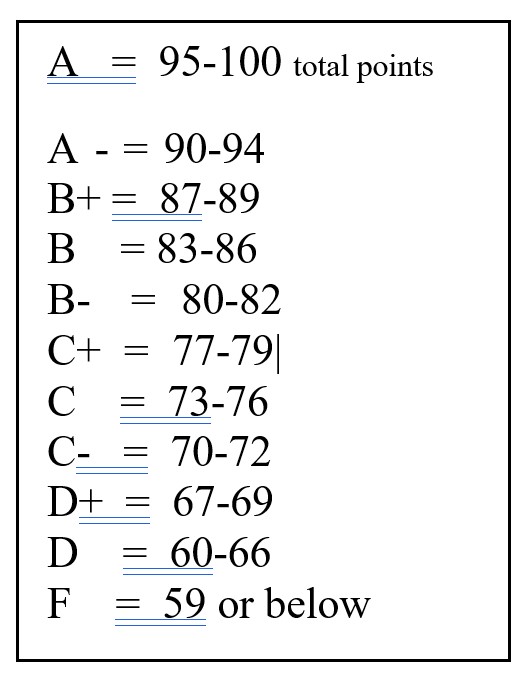
Grading Policy: If the student does not communicate with the instructor regarding late assignments on or before the due date of the assignment, no late assignments will be accepted. If communication regarding late assignments has occurred, assignments turned in after the due date may incur a 10% reduction for each day late up to a maximum of 50%. Late assignments will not be accepted after 7 days of the due date unless approved by instructor beforehand. Please be in constant communication with the instructor on late assignments.
Course Assessments: Each week’s assignments will be posted with details on Blackboard.
Course Outline and Weekly Topics:
Students are responsible for completing weekly modules including assigned readings, videos, presentations, and other assignments. Please refer to Canvas for details and due dates.

Course Expectations:
This course is organized by weekly modules in Canvas. Modules must be completed by the end of the week – each week and module starts on Monday and should be completed by the following Sunday by midnight. Each week’s module starts with an introduction to the module which includes details on readings, videos, discussion blogs, and assignments.
Guidelines for graded activities, projects, and papers will include detailed rubrics that define expectations and available points. Success for this class will be achieved by following and completing weekly modules; turning assignments in on time; communicating with the instructor; and actively participating in online discussions and activities.
The course’s online “Food Blog” is the place for you to actively describe your learning experiences with the readings, class online discussions, videos, assignments, and engagement with the community. This is the part of the online class that takes the place of in-person class discussion. Blog posts will serve as reaction papers to readings, discussions and course activities. Your goal should be to turn this blog into a rich online discussion infused with respectful debate, dialogue, and questioning concerning the readings. This is the place to display your knowledge of the material, curiosity, critical thinking and ability to link the reading material to outside experience. While these posts are understood to be relatively informal forms of writing— more like letters to friends than polished papers–please put some time and attention into the quality of these posts so they are clear, conceptually rich, and understandable to your classmates. You don’t have to write long entries, but these posts are an opportunity for you to make connections, bring up ideas that come up during the readings, and begin to articulate your thoughts about our complex food systems.
This class fulfills requirements for all three of the online programs offered by the University of Massachusetts Stockbridge School of Agriculture in Sustainable Food and Farming:
NOTE: The UMass Sustainable Food and Farming Certificate has been declared eligible for Veterans Educational Benefits. For instructions see: Veterans Benefits.
 Stockbridge Online