
STOCKSCH 256 (290STC) (3 credits)
Instructor – Jennifer Santry
Contact – jenevesantry@gmail.com
Cell: 970-389-8128 (available by text or by appointment)
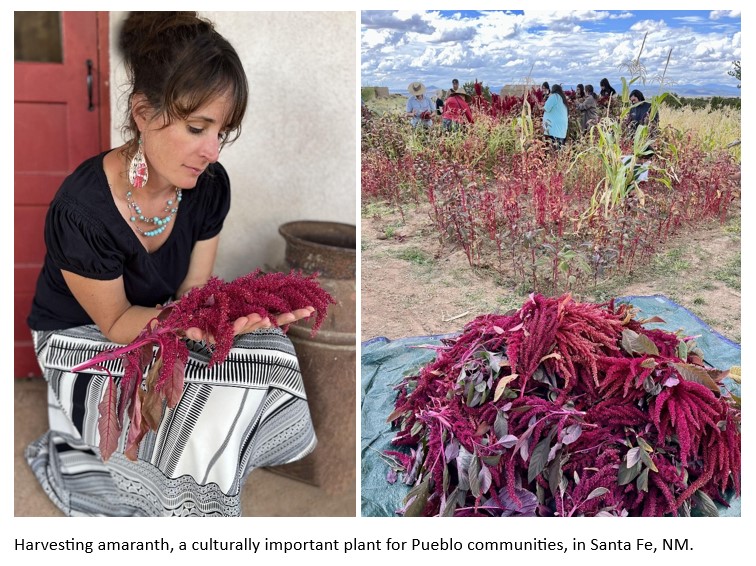
Instructor Bio: Jen Santry is a citizen of Choctaw Nation of Oklahoma and she is Sicangu Lakota, Mdewakanton Dakota, and Yankton Dakota. Jen has a doctorate in Educational Sustainability, MA in Nonprofit Management, and BS in Zoology. Through Lakota stories and relationships with food, she is collaboratively addressing the need for cultural preservation and land-based knowledge in sustainable agriculture education. Based out of Santa Fe, New Mexico, she has extensive experience working with Pacific Northwest and Southwest Tribes in climate change planning, ancestral food revitalization, and counter-storytelling (interpreting and narrating our own stories as Indigenous people). Jen is dedicated to decolonizing permaculture and regenerative agriculture. She teaches STOCKSCH 165 Intro to Sustainable Agriculture and Food Systems and STOCKSCH 354 Nonprofit Management for Community Food and Farming Programs. She also teaches Indigenous Planning and Native Food Systems in Montana State University’s Native American Studies Graduate program. In addition to teaching, she is the Director of Tribal Community Schoolyards at the Trust for Public land where she works with Tribal communities to transform underutilized school grounds into vibrant, culturally relevant outdoor learning spaces for Native youth to have hands-on opportunities for learning with the land.
==============================================
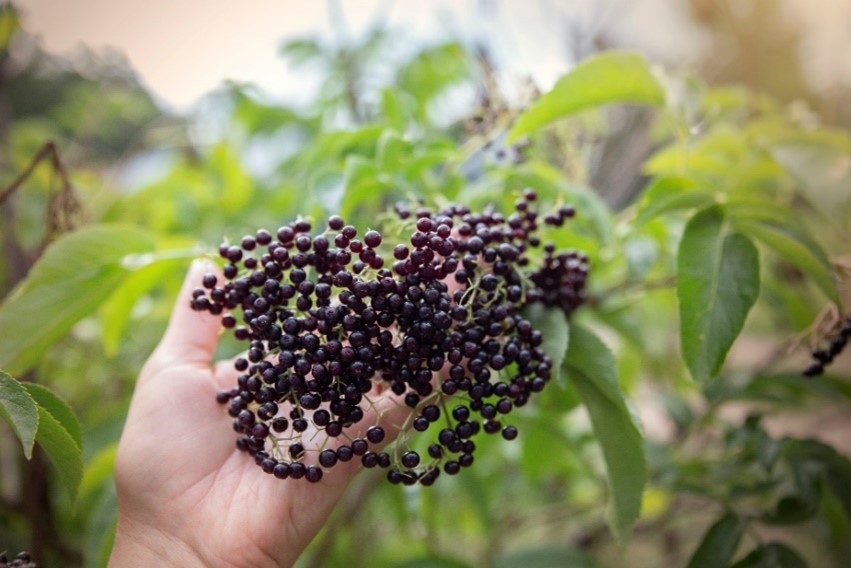
Watching the elderberries ripen, an important medicine often made into tea or boiled with maple syrup.
Course Overview
Indigenous lands and food are fundamental to community wellbeing, individual/collective identity, and cultural continuity. This course will offer a comprehensive exploration of Native food systems including socio-historical, narrative, theoretical, practical, and experiential perspectives on Indigenous foods. Students will develop a nuanced understanding of the rich history of Indigenous Food Systems, tracing their evolution and adaptation from time immemorial to the present day. Throughout the course, we will discuss the profound impact of settler colonization and climate change on Indigenous communities, which has disrupted their connections with the land, ecological relationships, and ancestral foodways. Food sovereignty will serve as a central framework, rooted in the principle that Indigenous peoples should have the autonomy to determine their own food systems. We will explore Native food relationships through contemporary food narratives from Indigenous communities across Turtle Island. We will also learn practical techniques for cultivating an ethical, kinship-based connection with Native foods and lands.
Key ontological and axiological assumptions for this course:
- We will actively center Indigenous pedagogies, epistemologies, ontologies, axiologies, methodologies, narratives, and relations to land (which a side effect becomes dislodging settler ones and narratives to Indigenous land and knowledge).
- We have a responsibility to knowing – this fundamental shift will move us in to approaching learning and knowing as a human responsibility to story and practice Indigenous knowledge and hold respectful, reciprocal relations with it (which also shifts us away from a western colonial framing of a right to knowing).
Learning Objectives – students will:
- Understand an Indigenized, socio-history of Indigenous Food Systems.
- Gain an understanding of, and appreciation for, Indigenous worldviews, values, spirituality, and lifeways and how these inform Indigenous food systems.
- Explore similarities and differences between Western food systems and Indigenous food systems.
- Understand effects of rapid, ongoing settler-colonialism (including climate change) on Indigenous lands, health, knowledges and languages, and how Indigenous peoples are adapting, reclaiming and resurging their lifeways, e.g. Indigenous Food Sovereignty Movement.
- Reflect on land-based connections and personal role as an ally or community member in supporting Indigenous food sovereignty, gatherers and growers, and Native food revitalization.

Content:
Week 1: Introduction to Indigenous Food Systems
Week 2: Since Time Immemorial – Indigenous Histories of Land & Food
Week 3: Indigenous Worldviews and Land/Food Relations
Week 4: Indigenous Agronomy & Ethnobotany
Week 5: Indigenous Foodways – Plant Relationships
Week 6: Indigenous Foodways – Hunting, Gathering and Fishing
Week 7: Indigenous Foodways – Harvest and Preservation
Week 8: Settler Violence and Disruptions to Indigeneity & Food Systems
Week 9: Consequences of Settler-colonialism on Indigenous Health & Food Systems
Week 10: Indigenous Rights and Food/Land Access
Week 11: Impacts of Climate Change on Indigenous Landscapes & Food Systems
Week 12: Indigenous Resurgence & Revitalization – Food Sovereignty
Week 13: Food for the Future – Where do we go from here?

 Stockbridge Online