
STOCKSCH 263 – Agricultural Leadership & Community Education
How to Enroll
- Instructor: Sarah Berquist, she/her/hers
- Contact Information: sbberqui@umass.edu
- *Email is the very best way to get in touch with me!
- Office Hours: Email me to make an appointment via Phone or Zoom!
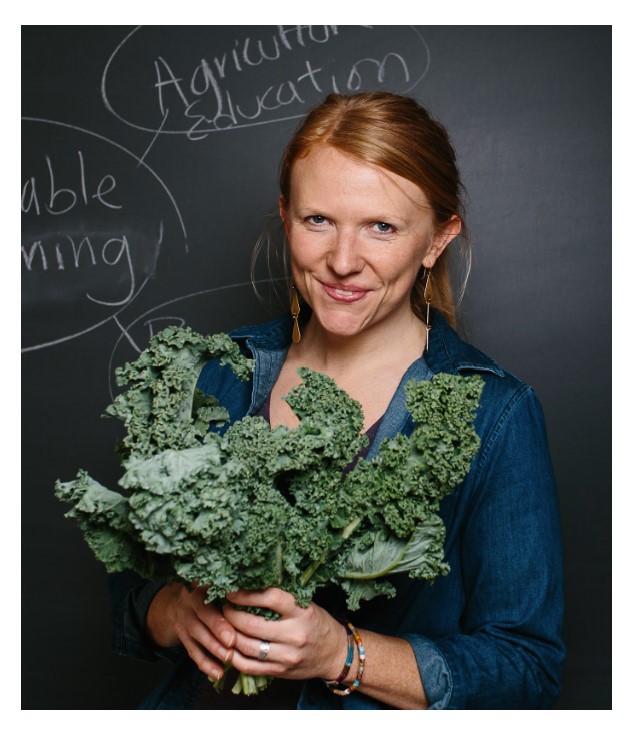
ABOUT THE INSTRUCTOR:
I have been engaged in sustainable agriculture and food systems work for the last 16+ years. I currently teach, advise, and provide leadership for the Sustainable Food & Farming campus program at UMass.
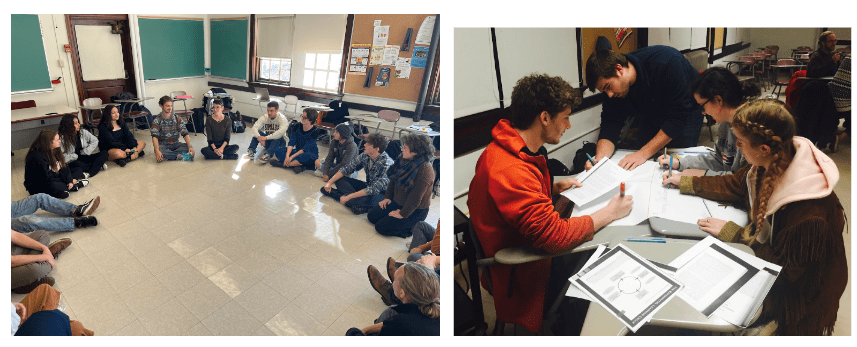
My approach to teaching is student-centered, participatory, emergent, inclusive, and experiential. I love to create and hold spaces, both on campus and online, where learning flows in all directions, and am truly grateful for all that I learn with and from my students.
Beyond my work at UMass: I run a small floral production and design side hustle, and also love practicing dance and swimming. Excited to work with you this semester!
Other courses I teach include:
- Agricultural Leadership & Community Education I (STOCKSCH 263)*
- Agricultural Leadership & Community Education II (STOCKSCH 397AL)
- Introduction to Sustainable Agriculture & Food Systems (STOCKSCH 165)
- Retail Floral Design (STOCKSCH 210)*
- Capstone in Sustainable Food & Farming (STOCKSCH 485)
- Wellness for Beginning Farmers (STOCKSCH 197P)
- Organic Gardening & Farming (STOCKSCH 120)*
*= offered online through UWW, otherwise offered on campus at UMass
Course Overview
This three-credit course will deepen your understanding of teaching methodologies, tools for leadership, and community-building strategies for formal and non-formal farm-based education. You do not have to be a teacher/educator to find this course relevant or useful.
The field of farm-based education is growing! More farms are expanding beyond production to offer educational programming, more schools are adopting school gardens, and demand is increasing for farm/garden-based community programs (youth and adult). As we advance toward more sustainable and equitable systems of production in agriculture, we need to train our next generations of farmers and food systems advocates to be skilled in pedagogy and practice to become more effective educators, coordinators, and leaders.
Education and leadership skills are required to thrive in the careers emerging in sustainable agriculture and food systems. Whether you see yourself training apprentices on your own farm/homestead, working with a non-profit, organizing and hosting workshops for your CSA members, or working in a formal educational role with a school, someday, you may be the one leading these workshops and organizing these events for your community.
In this course you will learn strategies to awarefully and equitably build community in a variety of settings including: on-farm/garden education, managing educational programs in k-12 public schools, university extension education and/or non-profits. My hope is to provide a brief introduction to various contexts that you may work in, and you will then engage more deeply with a context of your choice. You will explore and reflect on your learning style, examine theories of teaching and learning, how our identities influence our work as educators/leaders, and translate these theories into practice through designing inclusive lesson plans and implementing your own portfolio-worthy lesson content.
Course Learning Objectives:
By the end of this course, you should be able to:
- Write SMART learning objectives and design an educational event around those objectives
- Facilitate 1-2 icebreaker activities to build community in small and/or large group contexts
- Facilitate 8-12 minute virtual lesson relevant to sustainability, agriculture, and/or food systems employing “active” teaching methodologies
- Identify appropriate teaching tools for a teaching scenario in an agricultural context
- Identify and explain 2-3 key learning theories relevant to agricultural education
- Identify and explain 3-5 strategies for engaging youth and/or adults in formal and/or environmental education or farm-based settings
- Explore how to scale up the microteaching lesson design process for a short 30 minute-1 hour lesson relevant to sustainability, agriculture, and/or food systems for either youth or adults
- Identify basic steps needed for integrating gardens into public school curriculum
- Articulate 3-5 personal core values for leadership and/or teaching
Course Goals:
My hope is this course will provide space to explore and expand our awareness from looking to more deeply seeing and understanding skills to thrive in educating, facilitating and building community. We will learn some theoretical aspects of how people learn, while also beholding bigger questions in how to design educational experiences that truly engage, include and inspire people of all ages and abilities. I offer a variety of methods for sharing content (readings, lecturettes, videos, podcasts, and more) coupled with a mix of assessments to maximize engagement. This should be an inclusive community space to be curious, learn, and have fun together! Students with all levels of experience and interest are welcome.


What to expect?
This course will have students with diverse interests and varying levels of experience in teaching, leading, facilitating, organizing, and other leadership roles in agriculture. I try to make both my campus and online courses dynamic, engaging and accessible. You are not expected to have any experience in this field or to know exactly what context you want to work with. This semester, we will explore many contexts that you might engage in, and practice hands-on skills necessary to succeed as a leader, teacher, facilitator, organizer, educator, trainer, manager, etc. as best we can virtually/asynchronously.
The course format will be a mix of online discussions, reading, multimedia resources like podcasts and videos, lecturettes, interactive activities, and hands-on activities as best we can through Canvas. While there are limits to what can be done asynchronously, this is actually a wonderful opportunity to practice how educators are constantly adapting, innovating, and reaching wider audiences.
My hope is to hold space for exploration, growth, practice, and reflection. I am excited to add to your toolboxes and help build confidence as you step into jobs, and/or refine skills for current jobs, internships, and life experiences requiring leadership skills.

This class is part of the Sustainable Food and Farming Online Certificate Program and will count toward the Associate of Science degree as well as the Online B.S. degree.
To begin planning for the future, see….
Annual Class Schedule
NOTE: The UMass Sustainable Food and Farming Certificate has been declared eligible for Veterans Educational Benefits. For instructions see: Veterans Benefits.
If you are not interested in earning college credit, there are many non-credited workshops and short courses you can take outside of the university. For a list see: non-university workshops and courses.
 Stockbridge Online